
Sterling Silver vs Stainless Steel Men UK 2027
A sterling silver chain in a kitchen drawer for six months will turn dark grey.

A 316L stainless steel chain in the same drawer for the same six months will look identical to the day it went in. That’s the most visible single difference between sterling silver (925) and 316L stainless steel as men’s jewellery materials, and it explains 80% of why a buyer picks one over the other.
The other 20% comes down to price, weight, perceived value, and skin compatibility. This is the honest material comparison for UK men in 2026.
I run Monrich, a UK men’s jewellery brand using PVD-plated 316L stainless steel across the catalogue. Disclosure first.
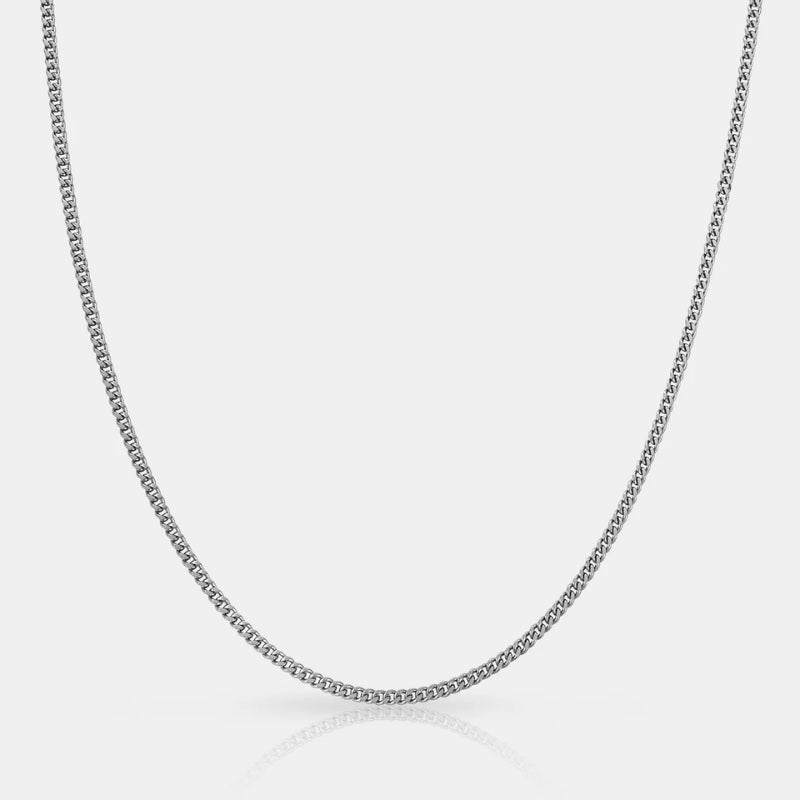
You can see the current men's silver jewellery line-up for reference as you read.
Quick answer

If you want a material that holds its colour indefinitely without polishing, survives gym, water, and sweat, and costs less per piece, 316L stainless steel is the more practical choice.
If you want a material with precious-metal heritage, traditional jewellery value, the ability to develop natural patina over years, and you’re willing to polish it periodically to maintain colour, sterling silver is the more traditional choice.
Both are valid, both have genuine pros and cons. The decision is about what you want from the piece, not which is “better” in any absolute sense.
What sterling silver actually is
Sterling silver is 92.5% pure silver alloyed with 7.5% other metals (typically copper). The “925” stamp on sterling silver jewellery refers to this 92.5% purity. Pure silver is too soft for jewellery; the copper hardens it to a workable strength while keeping most of the silver’s appearance.
The copper content is also what causes tarnish. Pure silver doesn’t tarnish significantly, but sterling silver tarnishes because the copper reacts with sulphur compounds in air and skin oils. The “darkening” of an old silver chain is the copper oxidising, not the silver itself.
Sterling silver is recognised as a precious metal by UK hallmarking law and carries the Assay Office’s lion passant mark.
Sterling silver is recognised as a precious metal by UK hallmarking law and carries the Assay Office’s lion passant mark.
What 316L stainless steel actually is

316L stainless steel is an iron alloy with approximately 16-18% chromium, 10-14% nickel, and 2-3% molybdenum. The “L” in 316L stands for “low carbon”, which improves corrosion resistance.
It’s the same grade of stainless steel used in surgical implants, marine hardware, and pharmaceutical equipment, environments where the material must not corrode, tarnish, or release ions. The chromium content forms a passive oxide layer on the surface that prevents further oxidation.
316L is not a precious metal by traditional jewellery valuation. It carries no hallmark in UK law. The material is industrial-grade engineering steel adapted for jewellery use.
Tarnish and oxidation
Sterling silver tarnish behaviour: - Begins to darken within 2-6 weeks of regular wear - Tarnish rate accelerated by sulphur (eggs, certain foods), sweat, humidity, chlorine - Tarnish removal: silver polishing cloth, dip cleaner, or jeweller’s polish - Polishing time: 5-15 minutes per piece for thorough clean
316L stainless steel oxidation behaviour: - No visible tarnish or darkening over years of regular wear - Resistant to chlorine, sweat, salt water, humidity - No polishing required to maintain colour - Cleaning: damp cloth, mild soap if needed
For lowest-maintenance daily wear, 316L is the more practical material. For buyers who don’t mind polishing, sterling silver looks excellent fresh-polished and develops character through patina between polishes.
Hardness comparison (Mohs scale approximate): - Sterling silver: 2.5-3 - 316L stainless steel: 5.5-6.5
Durability and scratching

Hardness comparison (Mohs scale approximate): - Sterling silver: 2.5-3 - 316L stainless steel: 5.5-6.5
316L is roughly twice as hard as sterling silver. This means 316L pieces scratch less under normal daily wear, retain crisp edges longer, and are harder to deform under impact.
For a chain worn at the gym, with weights, or against a watch, 316L holds up significantly better. Sterling silver chains develop visible micro-scratches within months of active wear.
Both materials can be deeply scratched or dented by hard impact. Neither is “indestructible”, but 316L resists everyday wear marks meaningfully better.
Weight comparison
Density comparison: - Sterling silver: 10.36 g/cm³ - 316L stainless steel: 8.0 g/cm³
At the same dimensions, sterling silver is roughly 30% heavier than 316L. A 4mm Cuban chain in 22” weighs roughly 25-30g in sterling silver vs 17-22g in 316L.
The weight difference is felt by the wearer. Sterling silver feels more substantial at the back of the neck. 316L feels lighter and more comfortable through long days.
For some men, the weight is the point: heavier chain reads “real” jewellery. For others, the lower weight is the point: lighter chain is more comfortable for daily wear.
How do you maintain your other belongings?
The maintenance personality test
How do you maintain your other belongings?
If you’re the kind of man who polishes his shoes weekly, refreshes leather conditioning every few months, and notices when his car needs detailing, sterling silver fits your personality. The piece rewards consistent attention and develops character over years of care. The polishing routine becomes part of the relationship with the piece.
If you’re the kind of man who buys quality items and wears them hard without ceremony, who’d rather have a thing that just works than a thing that needs tending, 316L fits your personality. The piece holds its appearance through neglect, gym, water, and travel without expecting maintenance in return.
This isn’t a judgment about either personality. Both are valid approaches to objects. But the wrong material for the wrong personality creates frustration.
The man who hates polishing routines will own a tarnished sterling silver chain within months, regret the purchase, and replace with stainless. The man who likes care routines will own a PVD-plated 316L piece, find it boring in its stability, and add sterling silver to his collection for the rewarding maintenance.
Most British men in 2026 own both materials over time. The 316L sits as the daily-wear default; the sterling silver sits as the dress-up piece with character. Buying both is the most flexible solution. Buying the one that matches your maintenance personality is the most economical solution.
Skin allergies
Nickel allergy risk: - Sterling silver: very low (copper alloy doesn’t typically trigger nickel allergy) - 316L stainless steel: low (contains 10-14% nickel but in a passivated alloy that releases minimal ions)
Both materials are considered hypoallergenic for most wearers. The Australian Skin Centre studied 316L specifically and found nickel ion release below the EU regulatory threshold (0.5 µg/cm²/week) under normal wear conditions.
For severe nickel allergies, sterling silver is marginally safer. For typical sensitive skin, both materials work without reaction. Pure silver (without copper alloy) is the absolute safest but is too soft for jewellery use.
For comparable chain widths and lengths, 316L typically costs 50-70% of equivalent sterling silver.
Price comparison
Sterling silver chain prices (UK 2026): - Mass-market sterling chain (Argos, H Samuel): £40-£150 - Mid-tier sterling silver (Pandora, Mejuri): £100-£400 - Premium sterling silver (Hatton Labs, Serge DeNimes): £150-£500 - Designer sterling silver (Tom Wood, Miansai): £180-£700+
316L stainless steel chain prices (UK 2026): - PVD-plated 316L (Monrich, Craftd): £35-£130 - Polished 316L (Monrich, Vitaly): £30-£120 - Brushed/matte 316L (specialist): £40-£150 - Premium engineered 316L (Vitaly, John Hardy entry): £80-£250
For comparable chain widths and lengths, 316L typically costs 50-70% of equivalent sterling silver. The lower cost reflects the industrial material rather than precious-metal status, plus simpler manufacturing without hallmarking.
Which to pick
Pick sterling silver if you want: - Precious-metal heritage and hallmarked status - A piece that develops patina/character over time - The traditional UK jewellery material - Higher resale or pawn value - A piece you’re willing to polish periodically
Pick 316L stainless steel if you want: - Maximum durability through daily wear - No tarnishing or polishing maintenance - Lower price for comparable visual finish - Gym/water/sweat compatibility - A piece that stays the same colour through years
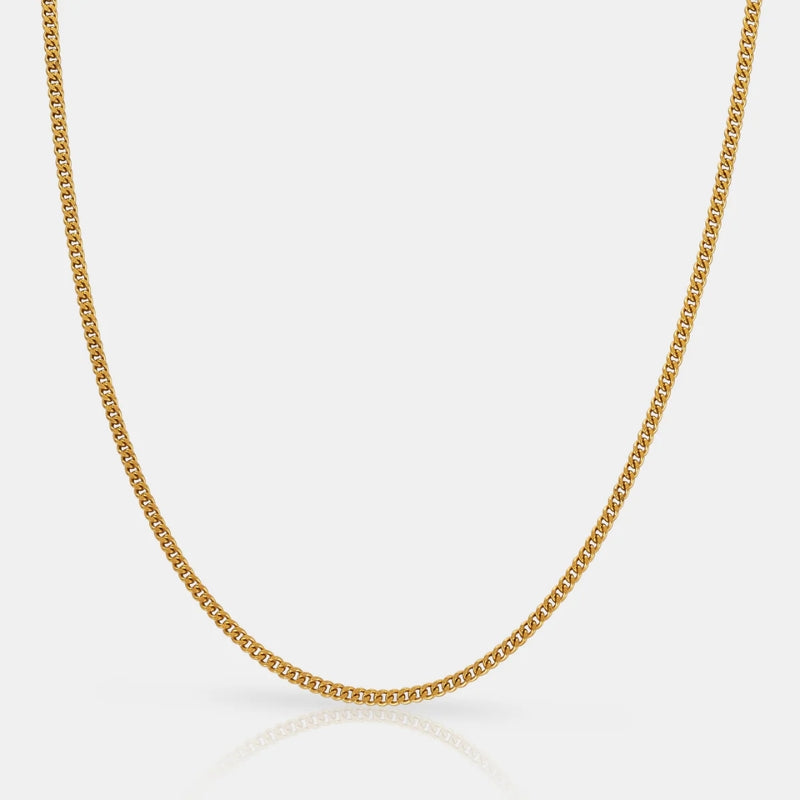
Browse the Monrich Cuban chain range in PVD-plated 316L for the durable, low-maintenance option. The 316L stainless steel guide for men covers the material in depth.
Browse the Monrich Cuban chain range in PVD-plated 316L for the durable, low-maintenance option.
FAQs
Is sterling silver more valuable than 316L stainless steel?
By precious-metal weight valuation, yes. Sterling silver has a melt value that 316L doesn’t. By jewellery use-value (durability, appearance, wearability), the two are different rather than ranked.
Why does sterling silver tarnish but 316L doesn't?
Sterling silver contains 7.5% copper which oxidises in air and skin oils. The oxidation produces the visible darkening. 316L’s chromium content forms a passive oxide layer on the surface that prevents further oxidation, so the material stays visibly stable.
Can I wear sterling silver in the shower?
Yes occasionally, but chlorinated water accelerates tarnish, and soap deposits build up in chain links. Best practice: remove sterling silver chains before showering, swimming, or sweating heavily.
Can I wear 316L in the shower?
Yes. 316L is fully water-resistant and chlorine-resistant. It’s used in marine and pharmaceutical equipment for the same reason. Daily shower/swim/gym wear is fine.
Which feels more "real"?
Sterling silver feels heavier and has more traditional precious-metal weight. 316L feels lighter and more contemporary engineering. Whether “heavier = more real” is a personal aesthetic preference.
Should I get PVD-plated 316L or solid sterling silver?
Depends on the look you want. For a gold-tone piece, PVD-plated 316L is the more durable spec than gold-plated sterling silver or gold vermeil. For a silver-tone piece, both polished 316L and sterling silver work, with the trade-off of tarnish maintenance on sterling.
Built after wearing the others.
Different by design.
PVD-plated 316L. 1-2 micron thickness declared. 12-month tarnish guarantee in writing. Permanent buy one get one free across the full catalogue.
Browse Monrich → UK shipping 2-4 days / 30-day returns / no customs